
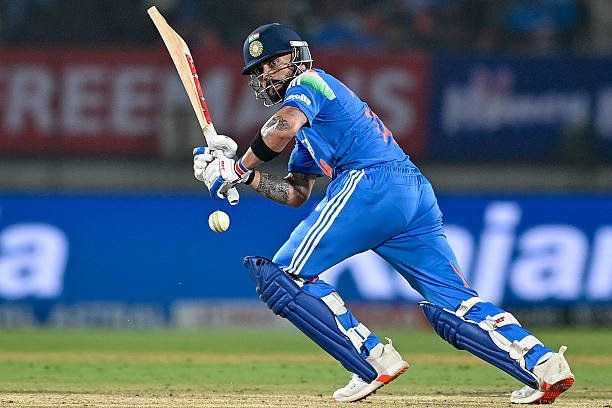
The Niranjan Shah Stadium Pitch Report shows what kind of playing conditions for the IND vs NZ 2026’s 2nd ODI. Over the seven ODIs, the Niranjan Shah Stadium in Rajkot has developed a clear pattern.
Teams batting first have won six times at this venue, with the average first innings score settling above 332. These figures suggest India and New Zealand will encounter batting-friendly conditions when they meet for the second ODI on January 14, 2026.
The surface at the Saurashtra Cricket Association Stadium typically offers true bounce and minimal seam movement throughout the innings. Batsmen can trust the pace of the ball, while bowlers struggle to extract lateral movement beyond the opening exchanges with the new ball.
Historical data indicates that chasing teams face significantly greater challenges here compared to sides setting targets. The toss becomes a critical factor, with captains preferring to bat first and post totals that place immediate pressure on the opposition.
Dew appears in evening matches, yet teams batting second have consistently failed to capitalize on potentially easier batting conditions.
Why call it Batting Paradise?
Calling Rajkot a batting paradise is not just a catchy nickname; it is the plain truth proven by scorecards. It’s impossible to ignore these very loud numbers. In One-Day Internationals, teams batting first here average a massive 332 runs. The two Test matches played saw first-innings totals of 537 and 649. It is a ground where big scores are the standard, not an exception.
The reason is the pitch itself. It is a classic flat track, hard and true from day one. For batters, the ball comes onto the bat nicely, with an even bounce you can trust. You can play your drives and pulls with confidence, without worrying about nasty seam movement or sharp spin early on.
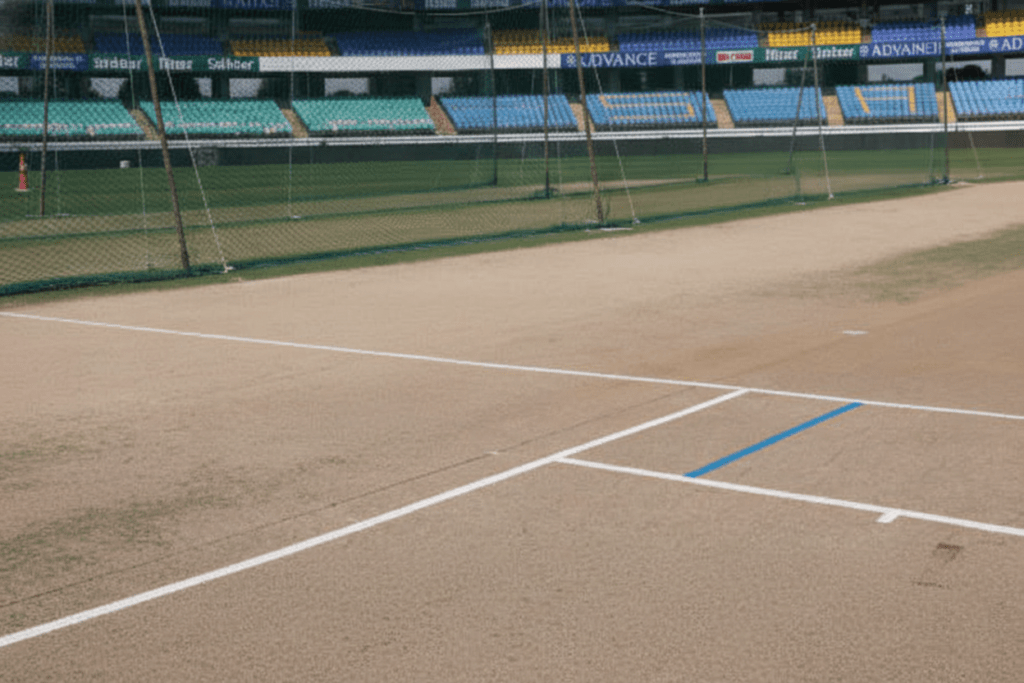
Fast bowlers have to toil for wickets, and spinners wait a long time for the ball to start turning. It is a surface that asks bowlers to be relentlessly accurate and hope for a mistake.
Virat Kohli has amassed the most runs here, accumulating 226 in ODIs with consistent authority. When it comes to explosive power on this ground, few can match David Warner. His strike rate here soars above 164 against India in 2023. The highest individual score at this ground belongs to Quinton de Kock, with 103 against Team India.
This is why local legends like Cheteshwar Pujara and Ravindra Jadeja have scored hugetriple-centuries here in domestic cricket. The ground rewards good batting for a very long time. Any captain’s toss strategy is simple here.
Score big runs, put a big total on the board, and let the scoreboard pressure do the work. In Rajkot, the pitch is built for the batters to cash in, making it a veritable paradise for anyone with a willow in hand.
Key ODI Records at Niranjan Shah Stadium
High scores are natural at Rajkot’s Niranjan Shah Stadium. By January 2026, these will be the key Men’s ODI records at the stadium.
Team Records
- Highest Team Total: 352/7 by Australia against India in September 2023.
- Lowest Team Total: 286 all out by India against Australia in 2023.
- First Innings Average: The average first innings score is 312 runs, which reflects the generally flat and batting-friendly nature of the pitch.
- Match Results: A clear winning trend has emerged, with teams batting first winning all four international ODIs played at this venue to date.
Batting Records
- Most Career Runs: Virat Kohli (India) leads the run-scoring charts with 226 runs across four innings at an average above 55.
- Highest Individual Score: 103 by Quinton de Kock for South Africa in 2015.
- High Strike Rate: David Warner (Australia) holds a remarkable venue strike rate of 154.34, highlighting how quickly established players can score in these conditions.
Bowling Records
- Most Career Wickets: Glenn Maxwell (Australia) is the most successful bowler with 4 wickets.
- Best Bowling Figures: 4 for 39 by Morne Morkel for South Africa against India in 2015.
- Pace vs. Spin: Fast bowlers have taken approximately 56% of the wickets at this venue, compared to 44% for spinners. This suggests both styles can be effective, with a slight pace advantage.
Team News and Tactical Impact for the Rajkot ODI
A compelling Gujarat evening awaits. India’s lead offers a cushion, but Washington Sundar’s absence opens a fresh selection conundrum. For the Kiwis, finding a way to blunt India’s middle-order remains the puzzle that could decide the series.
India: Forced Change in the Middle
The leading talking point for the hosts is the absence of Washington Sundar, who was ruled out of the series with a side strain. His absence creates a strategic dilemma for Captain Shubman Gill.
Does he lean towards batting depth or bowling balance?
The selection committee has brought in Delhi’s Ayush Badoni, a right-handed batter and part-time spin-bowling option, as his replacement. Badoni, a domestic performer with over 600 List A runs, offers a potential debut and strengthens the middle order.
However, the alternative is to maintain the seam-bowling all-rounder option by promoting Nitish Kumar Reddy, who was already in the squad. With Hardik Pandya still out, this move is incredibly important. In the pace department, the management faces a decision between Prasidh Krishna, who struggled for rhythm in the opener, and Arshdeep Singh, whose left-arm angle offers a point of difference.
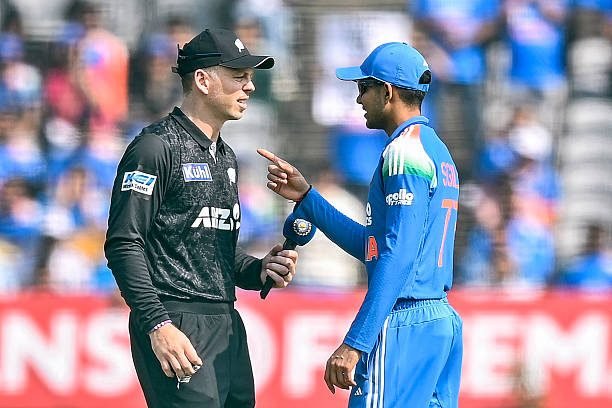
New Zealand: Searching for the Finisher
Despite the loss in Vadodara, the Black Caps take confidence from a resilient performance, particularly Kyle Jamieson’s four-wicket haul that nearly derailed India’s chase. While unlikely to make wholesale changes, the visitors have a critical weakness to address. Young leg-spinner Adithya Ashok was expensive in the first game, conceding 55 runs in six overs.
This has opened the door for a potential debut for Jayden Lennox, a left-arm spinner known for his accuracy and an impressive List-A economy rate of 4.86. Another point of contention is No. 3 batter Will Young, who is averaging a dismal 18.44 in ODIs since 2025, potentially paving the way for all-rounder Josh Clarkson.
The experienced trio of Devon Conway, Daryl Mitchell (who scored 84 in the first match), and Henry Nicholls remains the core for setting or chasing a massive total.
Tactical Impact: The Rajkot Factor
All strategies will be checked against two local facts at the Niranjan Shah Stadium. First is the Dew Dilemma. In the second innings, we expect a lot of due in the day-night match. The captain winning the toss will almost certainly choose to bowl first, aiming to avoid the challenge of a slippery ball and capitalise on a pitch that historically becomes even better for batting under lights.
Second is the Run-Fest Trap. With an average first-innings score exceeding 300, both teams know that even a total of 330 might not be safe. For India, this changes the role of their lead spinner, Kuldeep Yadav. He will now focus on taking wickets in the vital middle overs to change the game.
IND vs NZ Squads (Updated)
India ODI Squad: Shubman Gill (Captain), Rohit Sharma, Virat Kohli, KL Rahul (WK), Shreyas Iyer (Vice-Captain), Ravindra Jadeja, Mohammed Siraj, Harshit Rana, Prasidh Krishna, Kuldeep Yadav, Rishabh Pant (WK), Nitish Kumar Reddy, Arshdeep Singh, Yashasvi Jaiswal, Ayush Badoni (replaced the injured Washington Sundar)
New Zealand ODI Squad: Michael Bracewell (Captain), Adi Ashok, Kristian Clarke, Josh Clarkson, Devon Conway (WK), Zak Foulkes, Mitch Hay (WK), Kyle Jamieson, Nick Kelly, Jayden Lennox, Daryl Mitchell, Henry Nicholls, Glenn Phillips, Michael Rae, Will Young
Key Player Matchups and Predictions
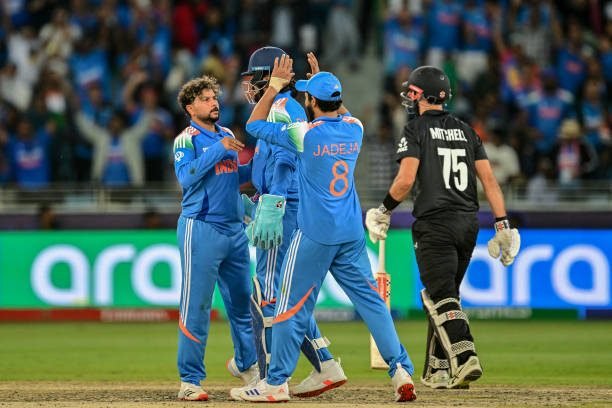
- Mohammed Siraj vs Devon Conway: Siraj’s ability to pitch full and find early swing is the primary threat to Conway’s solid technique. If Siraj can exploit the slight new-ball movement and dismiss Conway cheaply, India gains an early upper hand.
- Daryl Mitchell vs Kuldeep Yadav: Mitchell is a run-maker for NZ, averaging 86.33 in his last 8 ODIs. His performance against Kuldeep’s wrist spin will greatly affect New Zealand’s score, especially in the middle overs. Kuldeep’s wicket-taking potential (15 wickets in last 8 ODIs) is key to breaking NZ’s momentum.
- Virat Kohli vs Adithya Ashok: Kohli’s current form (70.63 average in last 10 ODIs, 93 runs in the last match) is exceptional. He will likely face the young spinner Ashok during a key phase. Kohli’s mastery of playing spin and rotating the strike will test Ashok’s discipline and variations.
- Shubman Gill vs Kyle Jamieson: Gill is a dominant force at the top. Jamieson, with his height and bounce, took four wickets in the last game and is a potent threat. The battle for early control between Gill’s aggression and Jamieson’s disciplined length will define the powerplay dynamics.
Prediction
Statistical trends strongly favor the team batting first at Rajkot. India has not done well in the past. They have only one win in four ODIs. This could give New Zealand a mental advantage.
India’s current batting depth and overall quality tilt the scales in their favor. On this flat deck, their in-form top and middle order have the ability to build a commanding total or chase one down.
India is still predicted to win the 2nd ODI. Their strong batting lineup is likely to do well in these conditions. This will help them win and take the series 2-0.
For more, Follow Sports Dribble on Facebook, Instagram, and Twitter.

Krishanu Das is the founder and lead writer of Sports Dribble. With more than five years of experience in sports writing, he specializes in creating well-researched guides, sports rules, player rankings, tournament explainers, and match analysis across cricket, football, basketball, tennis, volleyball, and many other sports.
Although he works as an accountant by profession, sports have always been his lifelong interest. That passion inspired him to build Sports Dribble, where he focuses on publishing accurate, easy-to-understand, and regularly updated content for sports fans around the world.
Before every article is published, Krishanu researches official rulebooks, governing bodies, tournament regulations, trusted statistics, and reliable sources to ensure readers receive factual and up-to-date information. His goal is simple: help every reader understand the game with clear explanations, practical insights, and information they can trust.