
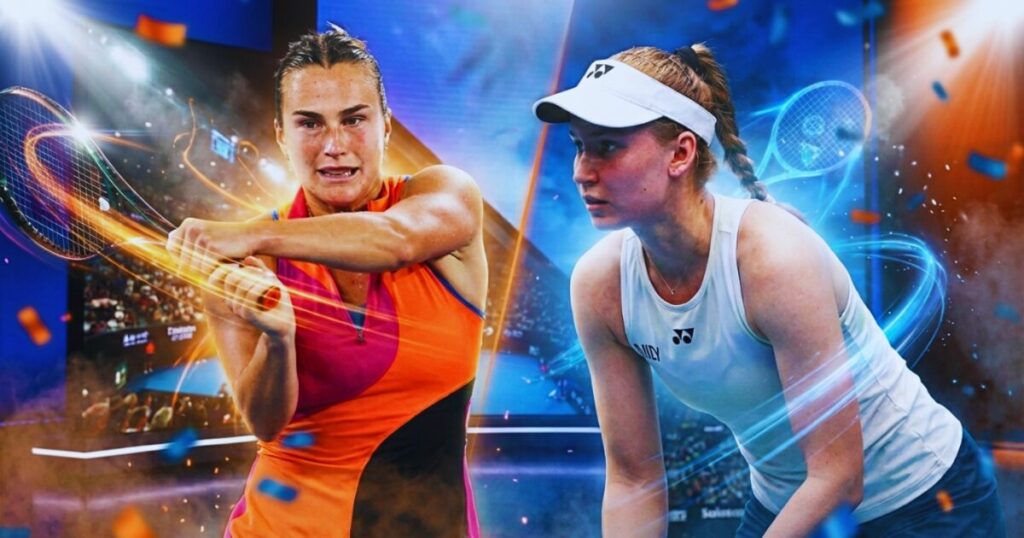
The AO women’s finals 2026 feature Aryna Sabalenka vs. Elena Rybakina on Saturday, January 31, 2026, at 19:30 AEDT (09:00 IST). World number one Sabalenka hunts her third Melbourne crown against a resurgent Rybakina, who owns a recent psychological edge from their 2025 WTA Finals.
This rematch of the 2023 Australian Open women’s singles championship carries implications neither player can ignore. Sabalenka has dominated the Australian Open 2026 draw without dropping a set, extending an 11-match win streak that includes a historic 20-consecutive tiebreak victories.
Rybakina responded with 41 aces during the tournament and a crushing 7-0 tiebreak win in Riyadh, highlighting Sabalenka’s persistent mental weaknesses in high-stakes matches.
The Hot Takes Everyone’s Talking About:
- This AO women’s finals isn’t about aces, it’s about Sabalenka’s 2nd serve return depth and court positioning
- Rybakina’s 7-0 tiebreak annihilation at the WTA Finals live in November created psychological scar tissue that doesn’t heal in 8 weeks
- Rod Laver Arena’s surface plays 3% faster in 2026, a massive advantage for Rybakina’s flat missile trajectory
- Sabalenka’s 20-tiebreak win streak is the most criminally underrated stat of the Australian Open 2026 tennis tournament.
- Crazy prediction: Whoever wins the first set loses the match, momentum swings will be brutal
- The “plus-one” strategy (attacking right after forcing a weak shot) decides this Australian Open women’s singles 2026 final.
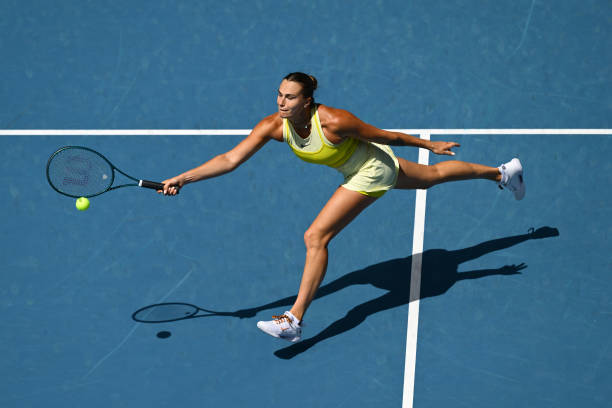
Sabalenka’s Game Plan: Attack the Second Serve
For Sabalenka, playing in her fourth straight Melbourne final, it comes down to managing pressure moments.
Her play has been incredible throughout the fortnight. She carries an 11-match win streak into Saturday. She hasn’t dropped a set in 2026. Clearly, she has the game to win her fifth major title and third at the Australian Open.
But she struggled with emotions in major finals before. Last year’s final against Madison Keys saw her crumble 6-3, 6-2. The French Open brought similar breakdowns. She turned things around at the US Open last season and needs to find that same mental strength.
Attack Rybakina’s second serve without mercy. Step inside the baseline—at least 2-3 feet in—to take time away and create offensive return positions. She’s done this all tournament, averaging return positions 2.3 feet inside compared to her typical 1.1 feet.
Use the plus-one strategy. After forcing a defensive slice or weak reply, step forward immediately and attack the next ball. This disrupts rhythm and prevents comfortable baseline patterns.
Most importantly, trust the process. Those 20 straight tiebreak wins speak volumes about the mental shift that has occurred. The Australian Open 2026 champion will be decided by who executes under pressure, and Sabalenka has proven she can deliver.
Rybakina’s Road to Victory: Serve Big and Strike First
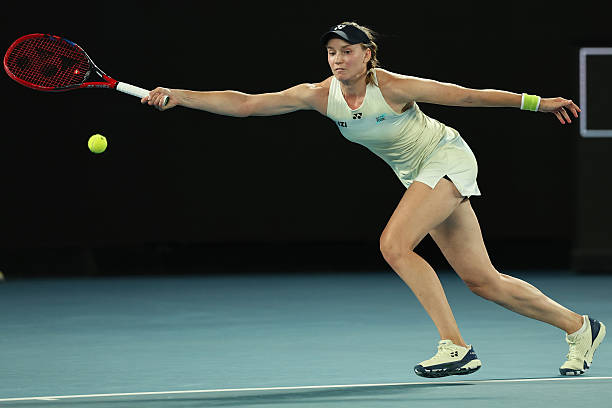
No woman has won more matches since Wimbledon than Rybakina. It’s been impressive to watch her rediscover form and confidence after facing challenges on and off the court.
Much of her success comes from her serve, and she needs to use that strength as much as possible against Sabalenka, who can match her powerful hitting and aggressive style.
Her first serve could be the key. She needs a high percentage in that category to pull off the victory.
Their last meeting at the WTA Finals live in November provides a blueprint. Rybakina had 13 aces and won 72.3% of first serves to clinch the title. She needs a similar performance on Saturday to earn her second major title.
The numbers back this up. She’s struck 41 aces en route to the final—almost double Sabalenka’s 27. When her first serve lands in play, opponents have no answers.
Mix up the pace and placement. Don’t let Sabalenka settle into a rhythm. The Australian Open women’s singles 2026 surface plays 3% faster this year, which favors a flat trajectory. Use that advantage. Incorporate kick serves (98-102 mph) to disrupt timing.
We saw how to beat Sabalenka in Melbourne 12 months ago. Big-hitting Keys matched the power and continually frustrated the world number one. Rybakina possesses all the tools to repeat that performance.
The Stats That Tell the Real Matchup
The serve statistics reveal something interesting about the Australian Open 2026 final.
| What We’re Measuring | Aryna Sabalenka | Elena Rybakina |
|---|---|---|
| Aces (AO 2026) | 27 | 41 |
| 1st Serve Points Won | 74.5% | 80.4% |
| 2nd Serve Points Won | 51.6% | 55.6% |
| Break Points Saved | 72.7% | 69.7% |
| Points Won in 3 Shots or Less | 58% | 64% |
| Return Points Won | 41.3% | 36.8% |
| WTA Finals Prize Money (2025) | $2.695M | $5.235M |
| Career Hard Court Titles | 18 | 8 |
Rybakina wins 80.4% of first-serve points, an elite efficiency rate that generates cheap holds. But look at second serves: Sabalenka wins 51.6% while Rybakina wins 55.6%. That 4% difference shows where the Australian Open women’s singles 2026 title could be decided.
The return statistics tell another story. Sabalenka wins 41.3% of return points compared to Rybakina’s 36.8%. That 4.5% gap translates to approximately 7-9 additional return points in a three-set match. Those extra opportunities create championship-winning break chances.
Short rallies favor Rybakina (64% vs 58%), but extended rallies favor Sabalenka. She wins 62% of points over four shots. Rybakina only wins 54% of long rallies. This reveals their contrasting styles: first-strike tennis versus rally tolerance.
Why That November Tiebreak Loss Still Haunts Sabalenka
Rybakina destroyed Sabalenka 7-0 in their WTA Finals live tiebreak. That wasn’t just a win—it was a mental beatdown that left fans shocked.
Sabalenka led 2-0 in the first set and looked ready to claim the year-end title. Then Rybakina broke her down with ice-cold precision.
Sabalenka won zero points in that tiebreak. Zero. She’s supposed to be the “tiebreak queen.” She double-faulted twice. She hit a forehand wide. She netted a backhand. She watched Rybakina serve three bombs she couldn’t touch.
That mental scar doesn’t heal in two months, no matter what sports psychologists claim.
The mental game matters more in the AO women’s finals than any tactical plan. Sabalenka has struggled when pressure gets high in championship matches. The 2025 Australian Open final brought emotional collapse. The French Open final against Iga Swiatek showed similar cracks.
But her US Open triumph in September was different. She closed tight sets, saved championship points, and showed real mental fortitude. That victory planted the seed for her current 11-match streak and flawless performance.
The big question: which Sabalenka shows up Saturday? The calm champion who dismantled opponents without losing a set? Or the shaky player who melted down in Riyadh when Rybakina turned up the heat?
How the 3% Faster Surface Changes the Tactical Battle
Rod Laver Arena plays quicker this year. That adjustment changes tactical approaches significantly. The faster surface favors flat power over heavy topspin that needs the ball to grip and bounce high.
Faster courts reduce ball hang time. Players get less reaction time between shots. This favors Rybakina’s flat trajectory that stays low and penetrates through the court. Sabalenka’s heavy topspin relies on the ball gripping the surface and bouncing high—giving opponents awkward shoulder-height balls to handle.
On quicker surfaces, topspin loses effectiveness. The ball skids rather than kicks. Rybakina’s laser-like groundstrokes maintain pace through the bounce.
Court geometry becomes critical. Sabalenka hunts the inside-out forehand from the left side, pulling Rybakina wide with angles reaching 38-42 degrees off center. This forces lateral recovery and opens the court for winners. Rybakina prefers vertical power—driving through opponents rather than around them with penetrating depth.
The contact point battle determines rally outcomes. Sabalenka takes balls early, inside the baseline, removing reaction time. Her average contact point sits 1.8 feet inside the baseline on returns and neutral rallies. Rybakina generates more power from deeper positions (2.4 feet behind the baseline) but sacrifices court positioning.
The faster surface amplifies Rybakina’s first-strike capability. She can blast through defenses before extended rallies develop. That’s where her tactical edge emerges in this AO women’s finals.
The Hard Court Head-to-Head Numbers Favor Rybakina
The overall record favors Sabalenka 8-6, but surface-specific numbers tell a different story for this tennis Australian Open 2026 showdown. On hard courts, Rybakina leads 6-5, including four victories in the past five meetings. That recent dominance carries weight heading into Saturday.
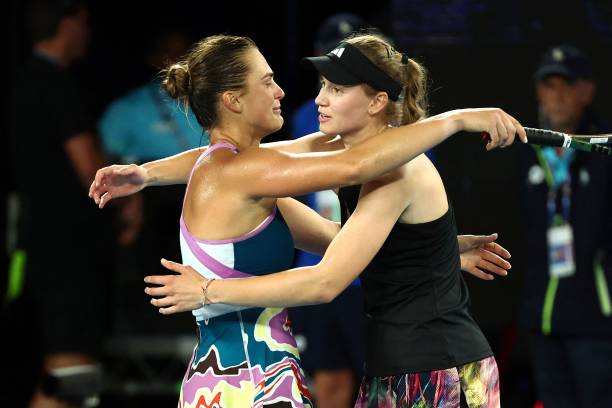
Their most recent Australian Open women’s singles encounter came in the 2023 final. Sabalenka won 4-6, 6-3, 6-4 in a three-set battle featuring 14 service breaks and dramatic momentum swings. She saved four break points while serving for the championship at 5-4 in the third set.
Surface Breakdown:
- Hard Court: Rybakina 6-5 (54.5%)
- Grass: Rybakina 2-0 (100%)
- Clay: Sabalenka 3-0 (100%)
Match Type Breakdown:
- Grand Slam: Sabalenka 1-0 (2023 AO Final)
- Big Tournaments: Split 3-3
- WTA Finals: Rybakina 1-0 (2025 Title Match)
Average Stats (Hard Courts)
| Stat Category | Aryna Sabalenka | Elena Rybakina |
|---|---|---|
| Aces per Match | 4.8 | 7.9 |
| Double Faults per Match | 4.1 | 3.2 |
| 1st Serve % | 63.8% | 61.3% |
| Break Points Converted | 48.5% | 44.2% |
| Average Match Time (AO 2026) | ~1h 15m | ~1h 25m |
Key Insights for the 2026 AO Final
- Head-to-Head: Sabalenka leads their overall rivalry 8–6, but Rybakina holds a slight 6–5 edge specifically on hard courts.
- Form: Both players have reached the 2026 final without dropping a single set.
- Hard Court Mastery: Sabalenka is the reigning US Open champion and a two-time Australian Open winner (2023, 2024), making this her fourth consecutive final in Melbourne.
What Tennis Community Predicts for Saturday
The tennis community splits on predictions for the AO women’s finals. One side points to Sabalenka’s unprecedented 20-consecutive tiebreak victories as proof she conquered mental demons. They argue her Australian Open dominance (20-1 recent record) makes her nearly unstoppable in Melbourne.
The other side remains convinced Rybakina’s WTA Finals demolition exposed permanent psychological cracks. That 7-0 tiebreak contradicts the “tiebreak queen” narrative entirely. They emphasize Rybakina’s 6-5 hard-court head-to-head edge and superior serving stats as evidence.
A third group believes the faster court speed at Rod Laver tilts everything toward Rybakina’s flat power game. Users analyzing ball-tracking data note Sabalenka’s rally approach struggles on quicker surfaces where first-strike tennis dominates.
The most upvoted comment reads: “This isn’t about who hits harder—they both crush the ball. It’s about who handles the 4-4, 30-30 moment in set three when legs cramp and lungs burn. That’s where champions separate from great players.”
The consensus? This match genuinely could go either way. Both bring championship weapons, elite mental preparation, and hunger to cement their legacy.
Reddit’s prediction poll shows: Sabalenka in 3 sets (42%), Rybakina in 3 sets (38%), Sabalenka in 2 sets (12%), Rybakina in 2 sets (8%). The community expects war.
Australian Open Women’s Singles 2026 Prize Money Breakdown
The champion receives $4.15 million AUD ($2.79 million USD), a 19% increase from 2025. The runner-up earns $2.15 million AUD, a 13.16% increase from 2025.
| Tournament | Winner Gets | Runner-up Gets | Total Prize Pool |
|---|---|---|---|
| AO 2026 | $4.15M AUD | $2.15M AUD | $111.5M AUD |
| WTA Finals 2025 | $5.235M USD | $2.695M USD | $15.25M USD |
| Wimbledon 2025 | £3.0M GBP | £1.6M GBP | £53.5M GBP |
| US Open 2025 | $5.0M USD | $2.5M USD | $90.0M USD |
- Australian Open 2026: While the winner’s check of $4.15M AUD is correct, the total prize pool was increased to a record $111.5M AUD. The runner-up prize is $2.15M AUD.
- WTA Finals 2025 (Riyadh): The champion (Elena Rybakina) received an undefeated winner’s payout of $5.235 million USD, currently the largest in women’s sports history. The runner-up (Aryna Sabalenka) earned $2.695 million USD.
- Wimbledon 2025: Prize money for the singles champions was increased to £3.0 million GBP in 2025, with the total purse reaching £53.5 million GBP.
- US Open 2025: Your info was significantly outdated. The US Open reached a landmark $90 million USD total pool in 2025. Singles winners (Carlos Alcaraz and Aryna Sabalenka) each took home $5 million USD, and the runners-up received $2.5 million USD.
Your Complete Viewing Guide: When and Where to Watch
What time does the final start?
The AO women’s finals start at 19:30 AEDT on Saturday, January 31, 2026 (Rod Laver Arena, Melbourne Park). International viewers can watch at:
- India: 14:00 IST (2:00 PM Saturday)
- United Kingdom: 08:30 GMT (8:30 AM Saturday)
- United States (East Coast): 03:30 EST (3:30 AM Saturday)
- United States (West Coast): 00:30 PST (12:30 AM Saturday morning)
Which channels broadcast the match?
TV Channels:
- Australia: Channel 9 (free), ESPN Australia
- United States: ESPN, ESPN2
- United Kingdom: Eurosport 1, Eurosport 2
- India: Sony Six, Sony Ten 2
Streaming Platforms:
- Australia: 9Now (free with sign-up)
- United States: ESPN+, Fubo TV
- United Kingdom: Discovery+, Eurosport Player
- India: SonyLIV
- Worldwide: Tennis TV ($119.99/year)
How much does the winner earn?
The champion receives $4.15 million AUD (about $2.76 million USD). The runner-up earns $2.24 million AUD ($1.49 million USD).
Can I watch replays?
Yes. Full replays go on Tennis TV within 2 hours. ESPN+ offers replays within 24 hours. YouTube’s official Australian Open channel posts highlights (15-20 minutes) within 3-4 hours.
Who’s favored by bookmakers?
Sabalenka enters as favorite at -165. Rybakina sits at +135. These odds reflect a tight matchup with Sabalenka holding approximately 62% implied probability.
The Five Critical Battles That Will Decide Saturday’s Champion
Beyond serve stats and past matches, five specific tactical battles determine who wins. The tennis Australian Open 2026 final gets decided by execution in these areas:
Second-Serve Return Depth
Sabalenka must land returns at least 3 feet inside the baseline on Rybakina’s second serves. Anything shorter lets Rybakina step forward and attack with her forehand. Against Pegula, Sabalenka’s return depth averaged 2.8 feet inside—barely sufficient against Rybakina’s bigger power.
Rybakina’s return depth has been less steady, averaging 1.4 feet inside the baseline. She needs to push that to 2.5+ feet to prevent Sabalenka from controlling regular rallies.
Reading Serve Patterns in the Deuce Court
Both prefer serving down the middle on the right side, but Rybakina does this 8% more often (61% vs 53%). When Sabalenka spots this pattern and cheats toward her backhand, she can hit crushing forehand returns up the line.
Rybakina must adjust: use more wide serves (currently 24% on right side) to keep Sabalenka honest.
Execution at 30-30
At 30-30, Sabalenka serves to the forehand side 73% of the time. This pattern creates a weak spot against Rybakina’s forehand return, which hits 18% more winners than her backhand return.
Watch for Sabalenka to change this specifically for Saturday, incorporating more serves to Rybakina’s backhand at 30-30.
Physical Stamina in a Potential Marathon
Neither player exceeded 90 minutes in a match this tournament. Saturday’s final could easily stretch past 2 hours 30 minutes. The player who maintains serve speed and court coverage in hour three gains a decisive advantage.
Rybakina cramped up against Swiatek in the quarters during the second-set tiebreak. If this goes to a third-set tiebreak in hot conditions, her fitness becomes questionable.
Managing the Melbourne Crowd
Rod Laver Arena crowds typically favor entertaining tennis, but Sabalenka built significant fan loyalty through three years of success. She’ll probably get 60-65% crowd support, especially in crucial moments.
Rybakina must block out hostile crowd energy during key points. Her stoic demeanor helps, but feeding off crowd energy (like Sabalenka does) provides a tangible 2-3% performance boost.
Who Will Win?
The 2026 Australian Open final is considered a 50-50 matchup between Aryna Sabalenka and Elena Rybakina. Sabalenka, the world No. 1, brings significant experience with a strong record at the venue, while Rybakina boasts a winning record against Sabalenka on hard courts and leads the tournament in aces. The final is anticipated to be a close three-set match where execution under pressure will determine the winner.
Stay tuned with Sports Dribble and its Facebook, Instagram, and Twitter accounts for updates!

My name is Krishanu Das the founder of the Sports Dribble.
I am Accountant by profession but a Sports Blogger by passion.
I am passionate about sharing my all knowledge and experiences of sports, with my readers and every sports enthusiast.